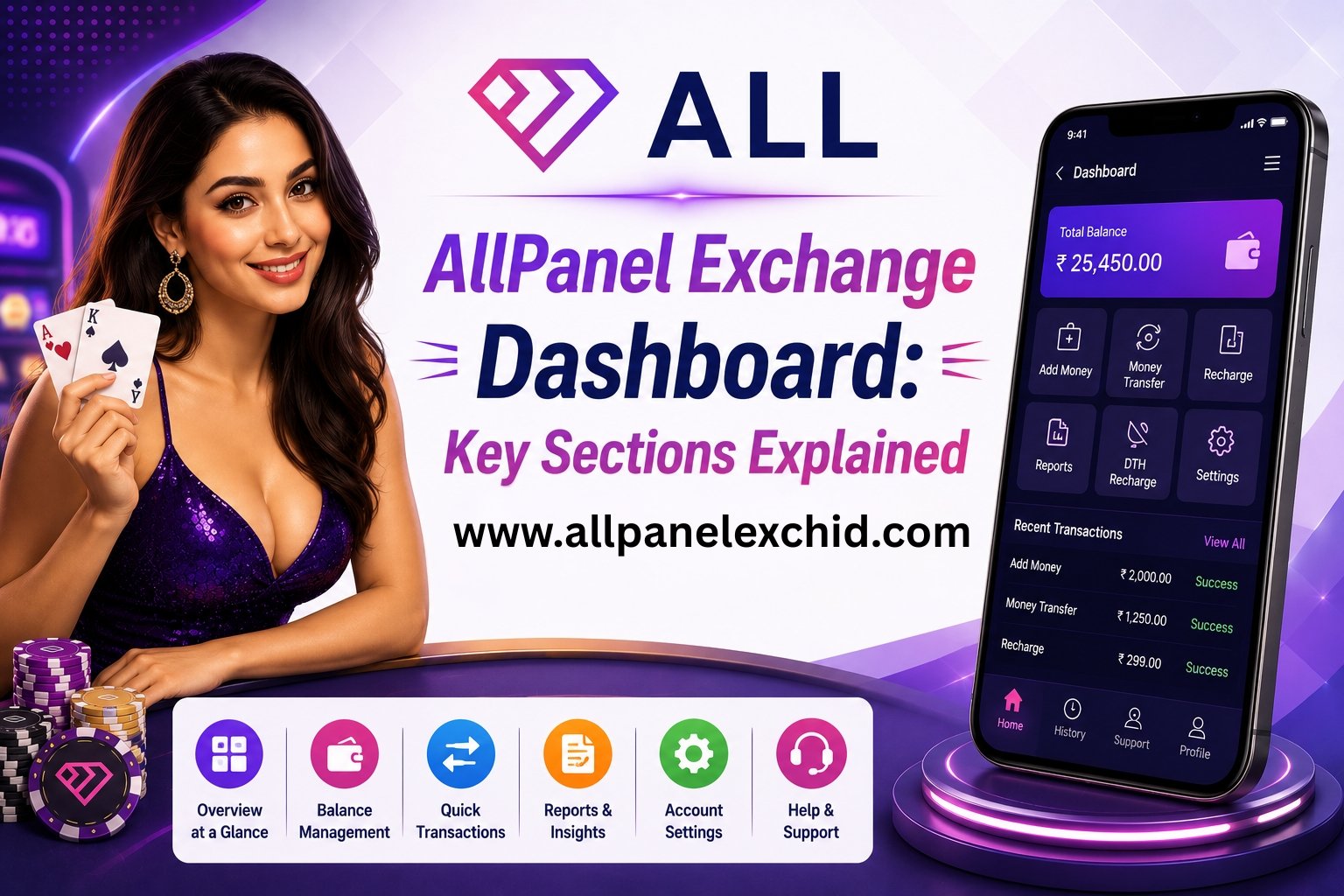
The dashboard is often the first major area users see after accessing a digital platform. For beginners, it can look busy at first because several menus, buttons, categories, account options, and shortcuts may appear together. However, once you understand what each section is designed to do, the dashboard becomes much easier to navigate.
The AllPanel Exchange dashboard can be viewed as a central control area. Instead of searching through different pages every time you need something, the dashboard can bring important platform sections closer together. Depending on the current version and device, it may include account information, navigation menus, gaming categories, settings, notifications, and support options.
This guide explains the dashboard in simple language. It is intended for users who want to become more comfortable with the AllPanel Exchange interface without needing advanced technical knowledge.
The exact dashboard layout may change over time. An application update, website redesign, or mobile optimization can move buttons and sections. Therefore, the current legitimate platform interface should always take priority over older screenshots or guides.
Allpanelexch | Allpanelexch ID | Allpanelexch Login | Allpanelexch App | Allpanel Exchange | Allpanelexch Apk
What Is a Dashboard?
A dashboard is essentially the main control area of a digital platform.
Think of it as the front page of your account. From here, you may be able to access different features without repeatedly searching for them.
A dashboard can contain several types of information.
You might see your account area, navigation controls, gaming categories, notifications, shortcuts, or links to other platform sections.
The dashboard does not necessarily contain every available feature. Some options may be placed inside a menu to keep the main screen clean.
For a new user, the goal should not be to memorize every button. Instead, focus on understanding the purpose of the main sections.
Getting to the AllPanel Exchange Dashboard
The dashboard is generally reached after opening the legitimate AllPanel Exchange access point and completing the appropriate account-access process.
Existing users should use their own credentials and avoid sharing them with others.
If you are accessing the platform from a smartphone, the dashboard may be optimized for a smaller touchscreen. On a computer, more options may appear at the same time because there is additional screen space.
If the dashboard does not appear after login, avoid repeatedly pressing buttons.
First check whether the page is still loading.
Then check your internet connection and browser or application.
The Main Navigation Area
One of the most important parts of a dashboard is the navigation area.
It provides a route to different sections of the platform.
On a desktop, navigation may appear as a horizontal menu or sidebar.
On mobile, it may be hidden behind a menu icon.
The navigation area can contain links to account features, gaming sections, settings, support, and other available tools.
Take a few minutes to understand these options before exploring deeper sections.
Knowing where the main menu is located makes it easier to return to the right place whenever you become lost.
Account and Profile Section
The account or profile area is usually one of the most important dashboard sections.
It can provide access to personal account information and management tools.
Depending on the current platform design, you may find options for profile details, password management, security controls, notifications, and preferences.
Do not change information simply because an option is available.
Read the labels carefully and make sure you understand what a setting does before modifying it.
If you need to update an account detail, review everything before saving.
Security Options
Security controls may also be available from the dashboard or account settings.
These options can relate to passwords, verification, account protection, login activity, or other security features.
Users should take these settings seriously.
A strong, unique password is a good starting point.
Keep verification codes private.
Do not give account credentials to people claiming to offer technical assistance.
If you notice unfamiliar account activity, use legitimate security and support channels rather than trying to investigate through random contacts.
Gaming Categories
For users interested in gaming, the dashboard may provide access to different gaming-related categories.
Depending on the current platform offering, users may encounter sections related to cricket, football, or other gaming activities.
The way these categories are presented can vary.
Some dashboards may use cards with images and labels.
Others may display simple text menus or tabs.
If you are new to the platform, select one category at a time and become familiar with its layout.
You do not need to explore every option immediately.
Understanding Quick Links
Many dashboards use quick links to make commonly used areas easier to reach.
A quick link can save time because it removes the need to open multiple menus.
For example, a dashboard might display shortcuts to account settings, a particular gaming category, or support.
The exact shortcuts can change.
If an option you previously used disappears from the dashboard, check the main menu before assuming it has been removed.
The platform may simply have moved it to another location.
Notifications and Alerts
Notifications can appear on the dashboard when the platform supports this feature.
They may provide information about account activity, updates, system notices, or other platform events.
Read notifications carefully.
An unexpected notification containing a link should not automatically be trusted.
If it asks you to enter your password or verification code, open the platform directly through a trusted access point instead.
You can then check your account without relying on the message link.
Dashboard on Mobile Devices
The mobile dashboard may look different from the desktop version.
A smartphone has a smaller display, so the interface needs to organize information more compactly.
Some sections may appear as cards.
Others may be hidden inside a menu.
Buttons may be larger to make them easier to tap.
A mobile dashboard can therefore seem simpler than a desktop dashboard even when both provide similar functions.
If you cannot find a feature, check the main navigation menu.
Dashboard on Desktop
Desktop dashboards can take advantage of larger screens.
This may allow several navigation elements to remain visible.
A sidebar can stay open while you move between sections.
Information can also be displayed in wider cards or multiple columns.
The larger layout may be helpful for users who prefer seeing more information at once.
However, desktop access should still be protected with the same security habits as mobile access.
Browser and Application Differences
If AllPanel Exchange is accessed through both a browser and a supported application, the dashboard may not look identical.
An application may use a dedicated interface.
A browser may display the platform as a responsive website.
The navigation structure can therefore differ.
Do not assume that an application screenshot should perfectly match a browser screen.
Instead, look for the same basic concepts: dashboard, account, navigation, gaming sections, settings, and support.
Three Things to Learn First
If you are a new user, concentrate on these three areas before exploring everything else:
- Main menu: Learn how to move between the dashboard and other platform sections.
- Account area: Know where profile, password, and security settings are located.
- Support: Identify where legitimate assistance is available if you encounter an access problem.
Once these three areas become familiar, the rest of the dashboard is generally easier to understand.
Dashboard Cards and Panels
Modern interfaces often use cards or panels to organize information.
A card may represent a gaming category, account feature, shortcut, or platform update.
Cards are useful because they separate different functions visually.
Read the title and description before selecting one.
If a card contains a button, make sure you understand where it leads.
Do not click rapidly through several options simply to see what happens.
A careful approach reduces accidental actions.
Using the Dashboard Efficiently
A dashboard becomes more useful when you know what you normally need.
If you regularly visit a particular section, learn the shortest route to it.
If you primarily manage your account, become familiar with profile and security settings.
If you mainly explore gaming categories, learn the location of those sections.
There is no requirement to use every feature.
Good navigation means knowing where the features relevant to you are located.
Account Management From the Dashboard
The dashboard can provide a starting point for account management.
Depending on the current interface, you may be able to reach profile settings, password tools, security options, or notification preferences.
Before making changes, check the information carefully.
For example, if you are updating a contact detail, make sure there are no spelling errors.
If the platform asks you to verify a change, complete the process through the legitimate interface.
Never give verification codes to another person.
Password Management
Password management is an important part of the dashboard experience.
If you decide to change your password, create a strong and unique replacement.
Do not use a password that is already used on another important account.
Avoid obvious information that other people might know.
After changing it, make sure you remember or securely store the new credential.
Never send your password through messaging apps or social media.
Account Recovery
A dashboard may provide access to recovery-related information, but password recovery usually begins from the login screen if you cannot access the account.
If you forget your password, use the legitimate recovery option.
Follow the verification instructions provided by the platform.
Do not use third-party websites that promise instant account recovery.
Do not give strangers remote access to your device simply because they claim to be able to fix the account.
Protecting Dashboard Access
A dashboard contains information connected to your account, so protect access to it.
Use a secure screen lock on your smartphone.
Avoid leaving your account open on shared computers.
Do not save credentials on public devices.
Keep your operating system and browser updated.
If you use an application, only install updates from legitimate sources.
These habits can help protect your account from unnecessary risks.
Dashboard and Gaming Navigation
Gaming users may find the dashboard particularly useful because it can act as a starting point for different categories.
A user might begin at the dashboard, select a gaming category, explore the available section, and then return to the main screen.
Learning this basic path can make navigation much faster.
If you become confused inside a gaming section, return to the dashboard rather than repeatedly pressing unrelated buttons.
The dashboard acts as your navigation reset point.
Understanding Platform Updates
A dashboard can change after an update.
A section that previously appeared near the top might move.
A navigation icon may change.
New categories may be added.
Some features may be reorganized.
This is normal for digital platforms.
When the interface changes, spend a few minutes exploring the updated dashboard.
Do not immediately assume that a missing feature has been removed.
Check the main menu and settings first.
What If the Dashboard Is Blank?
A blank dashboard can have several possible causes.
Your internet connection may be unstable.
The browser or application could have encountered a temporary error.
Your device may be low on available storage or memory.
The platform could also be experiencing a temporary technical issue.
Start with basic troubleshooting.
Check your connection.
Restart the application or browser.
Restart the device.
If the problem continues, check whether legitimate platform support information mentions maintenance or technical issues.
What If the Dashboard Is Slow?
Slow loading can be frustrating, but avoid repeatedly pressing buttons.
First test your internet connection.
Open another trusted website to see whether it loads normally.
If other websites are also slow, the problem may be your connection.
If everything else works, restart the AllPanel Exchange application or browser.
Check your device storage and close unnecessary applications.
What If a Menu Option Is Missing?
A missing option does not always indicate an account problem.
The platform may have updated its interface.
The feature may now be located under another menu.
The option might not be available on your current device.
The application or browser could also require an update.
Check the main menu, profile area, and settings.
If you still cannot locate the option, consult current legitimate platform information.
Browser Troubleshooting
If you are accessing the dashboard through a browser, start by checking whether the browser is updated.
Close unnecessary tabs.
Restart the browser.
Check your connection.
If the dashboard still fails to display correctly, try another trusted website to see whether the browser itself is working.
Do not switch to an unknown AllPanel Exchange website just because it appears to provide a similar dashboard.
Application Troubleshooting
Application users should check several basic areas when the dashboard fails.
Make sure the application is from a legitimate source.
Check available device storage.
Restart the application.
Restart your smartphone.
Review whether a legitimate update is available.
Do not download a modified APK as a quick fix.
An unknown application package can introduce security risks.
Using the Dashboard Responsibly
Easy navigation can make gaming more convenient, but convenience should not remove healthy boundaries.
If you use gaming-related features, take regular breaks.
Avoid gaming while driving or doing anything that requires full attention.
Keep gaming separate from work, education, sleep, and important responsibilities.
If any gaming activity involves financial decisions, understand the relevant risks and rules before participating.
Always follow applicable laws and age requirements.
When to Contact Support
If you have checked your internet connection, device, application, browser, and login information but still cannot access the dashboard, legitimate support may be the next step.
When contacting support, describe the problem clearly.
Mention which page you were trying to open and what happened.
If you received an error message, provide the wording without including private credentials.
Never send your password or verification code.
A legitimate support request should explain the problem without exposing sensitive account information.
Frequently Asked Questions
What is the AllPanel Exchange dashboard?
The dashboard is the central area used to navigate the platform. It may provide access to account functions, gaming categories, settings, notifications, and other available features.
Is the dashboard the same on mobile and desktop?
Not necessarily. Mobile and desktop layouts can be different because they are designed for different screen sizes.
Where can I find account settings?
Account settings are usually accessible through a profile, account, or settings menu. The exact location can change with platform updates.
Why does my dashboard look different from an older guide?
The platform may have been updated. Interfaces can change their menus, buttons, colors, and section arrangement over time.
Why is my dashboard loading slowly?
Possible causes include weak internet, device performance, browser problems, application issues, or temporary platform conditions.
What should I do if the dashboard is blank?
Check your internet connection, restart the browser or application, restart your device, and check for current legitimate platform notices.
Can I access gaming categories from the dashboard?
If those features are currently supported, the dashboard or main navigation may provide shortcuts to available gaming sections.
How can I protect my dashboard access?
Use a strong unique password, keep verification codes private, protect your device, avoid suspicious links, and use legitimate access points.
Should I install another APK if the dashboard does not load?
No. First troubleshoot the existing application, browser, connection, and device. Avoid unknown or modified APK files.
What should I do if I cannot find a dashboard feature?
Check the main menu and account settings. The platform may have moved the feature after an update.
Final Thoughts
The AllPanel Exchange dashboard is best understood as the central map of the platform. You do not need to learn every option immediately. Start with the main menu, account section, gaming categories, settings, and support area.
Once you understand these key sections, navigation becomes easier. You will know where to go when you want to manage your account, explore gaming-related areas, check available settings, or look for assistance.
Remember that dashboards can change. A website or application update may rearrange sections or introduce new navigation controls. If something looks different from an older guide, focus on the current legitimate interface rather than assuming that the platform is malfunctioning.
Mobile and desktop dashboards may also look different. A smartphone can use compact menus and touch-friendly controls, while a desktop may show several sections simultaneously. These differences are normal.
Security should remain part of your dashboard habits. Protect your password, keep verification codes private, avoid suspicious links, and never give strangers access to your account. If you use an APK, verify its source before installation or updating.
When technical problems occur, begin with simple checks. Test your internet connection, restart the application or browser, check device storage, and make sure your software is compatible. If the problem continues, use legitimate support rather than relying on unofficial contacts.
For gaming users, the dashboard can provide a convenient starting point for exploring available categories. Take your time, understand the navigation structure, and maintain reasonable limits around gaming sessions.
Ultimately, a dashboard does not need to be complicated. Once you understand what the major sections are designed for, the AllPanel Exchange interface can become much easier to navigate. A little familiarity, careful account management, and good security habits are enough to create a smoother everyday experience.
Get Allpanelexch ID: https://allpanelexchid.com/